Junto Al Pasig
When translated into English, the title of this work means Beside Pasig River. In response to the Jesuits’ request, Rizal wrote this one-act play in the Spanish language for the velada – a gala variety program during the principal feast days. The play centers around Leonido (a young Filipino who has a strong faith in the Virgin) and the Diwata/Satan, which symbolizes the Spanish oppression towards Filipinos. Its theme highlights Christianity, good vs. evil, and paganism. The Philippines’ national hero wrote it in honor of the Our Lady of Peace and Voyage of the UST, and the play was staged on December 8, 1880.
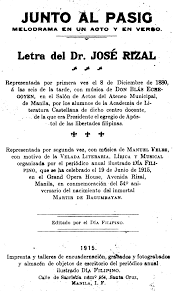
In his student life in Manila, the role of the Virgin of Antipolo is still prominent in his life where he notes that brings print of the image of the Virgin when he left home for school and later in his travels during his adulthood. In 1880, the Virgin of Antipolo would become Rizal’s muse when he wrote the zarzuela (one act play) entitled “Junto al Pasig” (Along the Pasig) while he was taking both his pre medicine and medicine proper courses at the University of Santo Tomas (a rare privilege for a student like him which dispels the long standing misinformation that he suffered mistreatment at the University).
Although he was a student of UST at that time, the Jesuits of Ateneo, whom he remained close with after completing his studies there, asked him to contribute to the festivities in honor of La Inmaculada Concepcion (the Patroness of Ateneo) as the president of the Academia de la Literatura Castellana in Ateneo Municipal de Manila and it is from this request that he wrote the said zarzuela. The one act play was perfomed by the members of the Academia on December 8, 1880 – Feast of the Immaculate Conception and the music for the choruses was written by a Spanish professor, Blas Echegoyen.
The following English translation that is presented in this blog is adapted from is taken from the translation of Leon Ma. Guerrero that was published in 1949 in the book “The Young RIzal”.
 The Literary Works of Rizal
Leave a comment